Yamaha Introduces DockPoint Pontoon
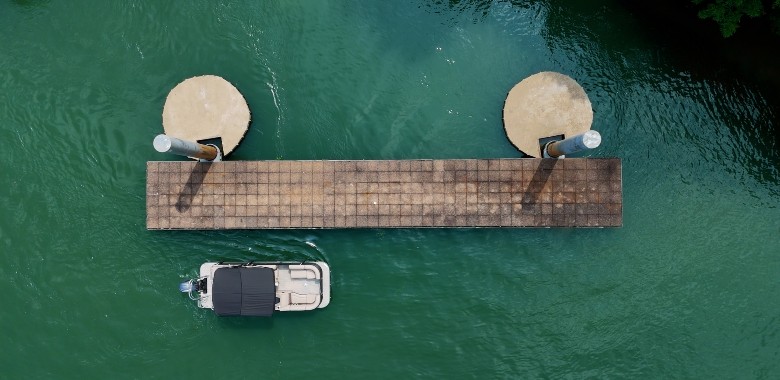
Yamaha U.S. Marine Business Unit recently debuted DockPoint® Pontoon, a new integrated control system that combines Yamaha Helm Master® EX joystick outboard control with Jet Thruster technology to deliver full maneuverability for single-outboard pontoon boats. The integration allows captains to use one joystick to move forward or reverse, move laterally, rotate in place and make precise adjustments during docking and other low-speed maneuvers.
“Integrating Helm Master EX joystick outboard control with proven Jet Thruster technology gives single-outboard pontoon owners a new level of control at the dock and in other close-quarter situations,” said Cortlandt Minnich, Product Manager, Outboard Control Systems, Yamaha U.S. Marine Business Unit, in a news release. “DockPoint Pontoon brings the outboard and thruster together through one intuitive control, allowing captains to move laterally, rotate in place and make precise adjustments with the joystick. It’s designed to make maneuvering a pontoon easier and give boaters greater control when they need it most.”
Yamaha states that it collaborated with Holland Marine Parts, maker of Jet Thruster, to integrate the company’s technology with Yamaha joystick control and a single outboard. The system coordinates the Yamaha outboard and the Jet Thruster automatically, directing power based on joystick input and giving captains precise, responsive control without requiring management of the wheel and shift controls independently.
How the DockPoint Pontoon Works
When the operator pushes the joystick sideways, the Yamaha outboard and the Jet Thruster work together to provide lateral movement, according to the company, helping the captain line up with a dock, slip or trailer. Twisting the joystick coordinates the outboard and thruster to rotate the pontoon, making it easier to change direction or reposition longer pontoons in tight spaces or challenging winds. Moving the joystick forward or backward uses the Yamaha outboard for propulsion, steering and speed control. DockPoint Pontoon also includes Joystick Hold for low-speed cruising.
The Jet Thruster draws water from beneath the pontoon and directs it through nozzles near the bow to create lateral thrust. The pump-based design reduces cavitation for quiet operation. Beyond docking, DockPoint Pontoon gives captains precise joystick control whenever careful positioning at low speeds is required, according to the company.
Yamaha explains that it engineered DockPoint Pontoon specifically for pontoon applications. The pump sits toward the rear of the center pontoon for weight distribution and water intake, while the Jet Thruster nozzles are positioned toward the bow beneath the ski locker. The flush-mounted design minimizes interference with trailering, lifting and storage while preserving valuable onboard storage space. Yamaha also designed the system to minimize hydrodynamic drag and its impact on the pontoon’s top speed.
Ready for Repeated Docking and Maneuvering
The system uses a Vetus® BowPro Brushless 24-volt motor system powered by two standard 12-volt batteries, according to the company. The thruster motor controller includes built-in DC-to-DC charging capability, allowing the Yamaha outboard to charge the batteries during normal boat operation and help keep the system ready for repeated docking and maneuvering.
Designed for OEM installation during pontoon manufacturing, Yamaha explains that DockPoint Pontoon arrives as a preassembled unit to streamline installation and rigging. The system is recommended for single-engine pontoons from 24-to-30 feet with Yamaha DEC/DES-equipped outboards from 150-to-450-horsepower, and carries Yamaha’s standard three-year limited warranty.
DockPoint Pontoon will be available to pontoon manufacturers in 2027 for select 2028 model year pontoons.