Pontoon market shows resilience
This article was originally featured in the January issue of Boating Industry.
As boat prices remain elevated across the industry, the value and affordability of pontoons are playing a role in purchasing decisions.
Boating Industry spoke with 2024 Top 20 Dealers and Harris Boats to understand how the pontoon segment performed in 2025 and what to expect in 2026. Their insights suggest that inventory management, product innovation and affordability are key to the segment’s resilience in a challenging economy.
Entry-level and premium pontoons
Today’s buyers aren’t solely focused on the lowest priced boat, but they are considering product quality and cost.
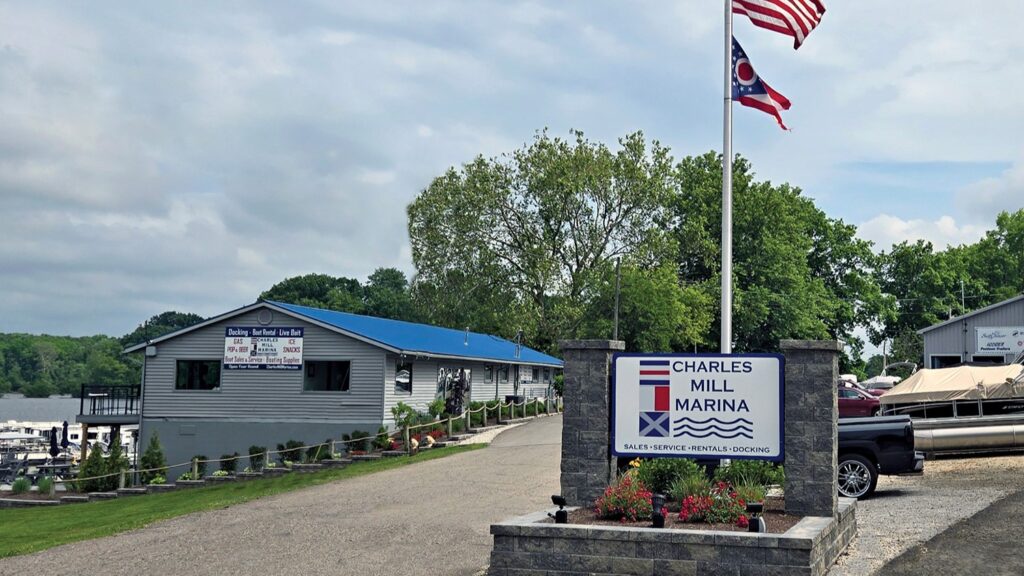
“We have noticed that buyers are gravitating towards shorter models overall as new boat prices rise,” said Andrew Schraedly, co-owner of Ohio’s Charles Mill Marina. “Buyers are making the decision to sacrifice an extra two to four feet of length in return for a lower price point.”
Charles Mill Marina carries SunChaser, Starcraft, Qwest Pontoons and Bentley Pontoons. Schraedly said 20-foot pontoons are the dealership’s most popular size, with 18- and 24-foot sales becoming less common. Shorter, 22-foot tritoons are also performing well.
“Today’s buyer is focused on value,” he explained. “They don’t want a ‘cheap’ boat, but they want boats that have solid features at an affordable price. Brand quality and reputation are also key considerations. We saw a lot of build quality issues on certain brands over the last few years that have been detrimental to their perception.”
As pontoons appeal to budget-conscious buyers and customers upgrading from used boats, entry-level pontoons and carefully priced tritoons are outperforming traditional mid-range models with price points that some consumers struggle to justify.
“We had the most success selling entry-level pontoons under $35,000, or tritoons priced between $55,000 and $65,000,” Schraedly said. “The mid-range of twin-tube pontoons featuring 50 to 115 horsepower really dipped compared to previous years. Buyers were either moving into tritoons or staying with more entry-level twin-tube pontoons.”
Hayden Hall, sales manager across Hall’s Sport Center’s four locations in Michigan, noted that manufacturers like Bennington are intentionally targeting entry-level buyers to build long term brand loyalty.
And “entry-level” doesn’t necessarily mean first-time boaters. Both dealers noted a shift away from the surge of first-time buyers seen during Covid-19, toward more repeat customers – experienced owners trading up from used boats, who know what they want before entering the showroom. They are more critical of product quality, features and brand reputation.
“Today’s buyer is much more likely to have a trade-in and a better idea of what they’re looking for in a boat,” Schraedly said. “They are knowledgeable and we often have a relationship with them from previous buying experiences.”
Buyers are gravitating toward affordability or upgrade considerably, as Hall noted the dealership’s continuous high end pontoon sales.
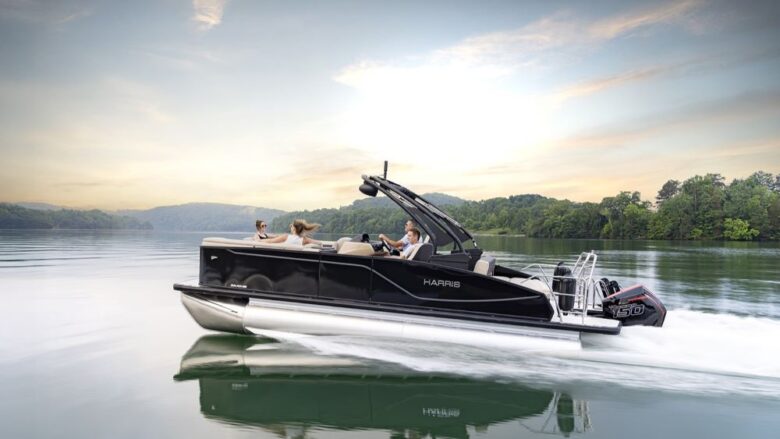
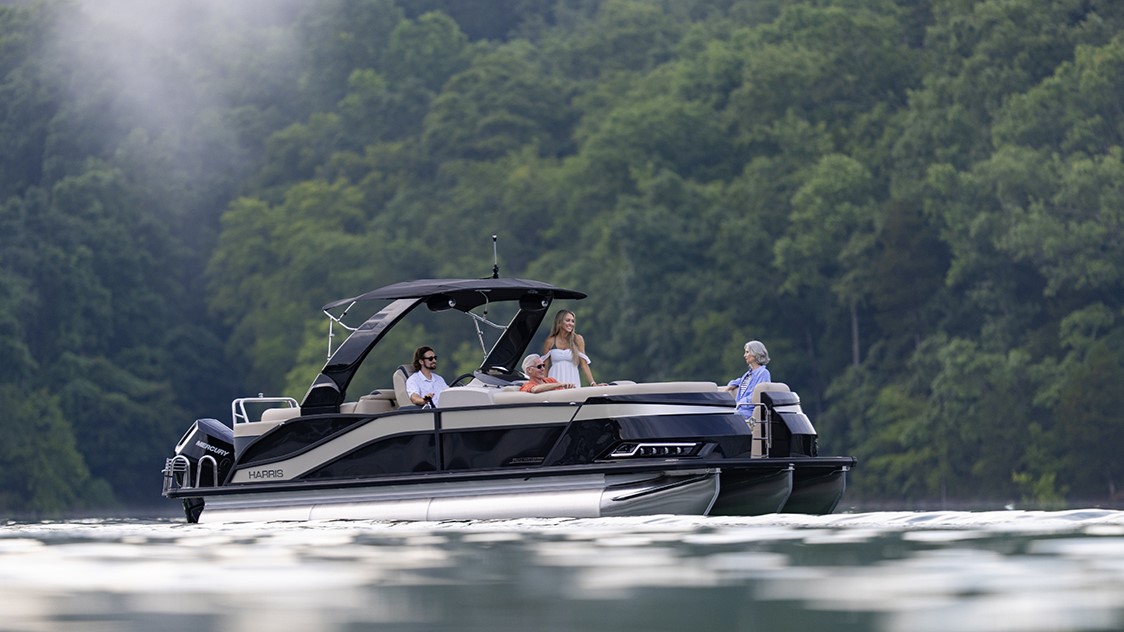
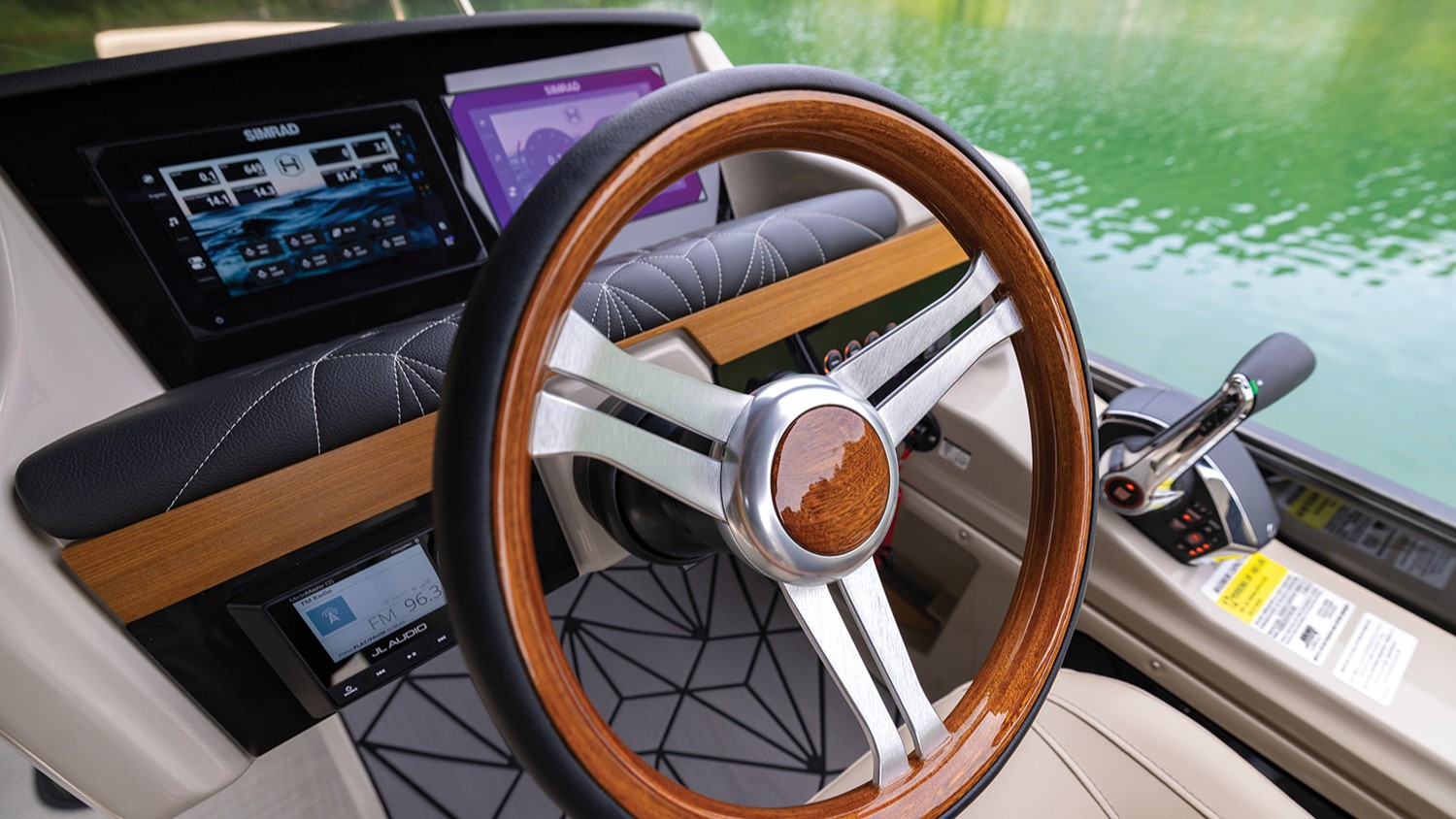
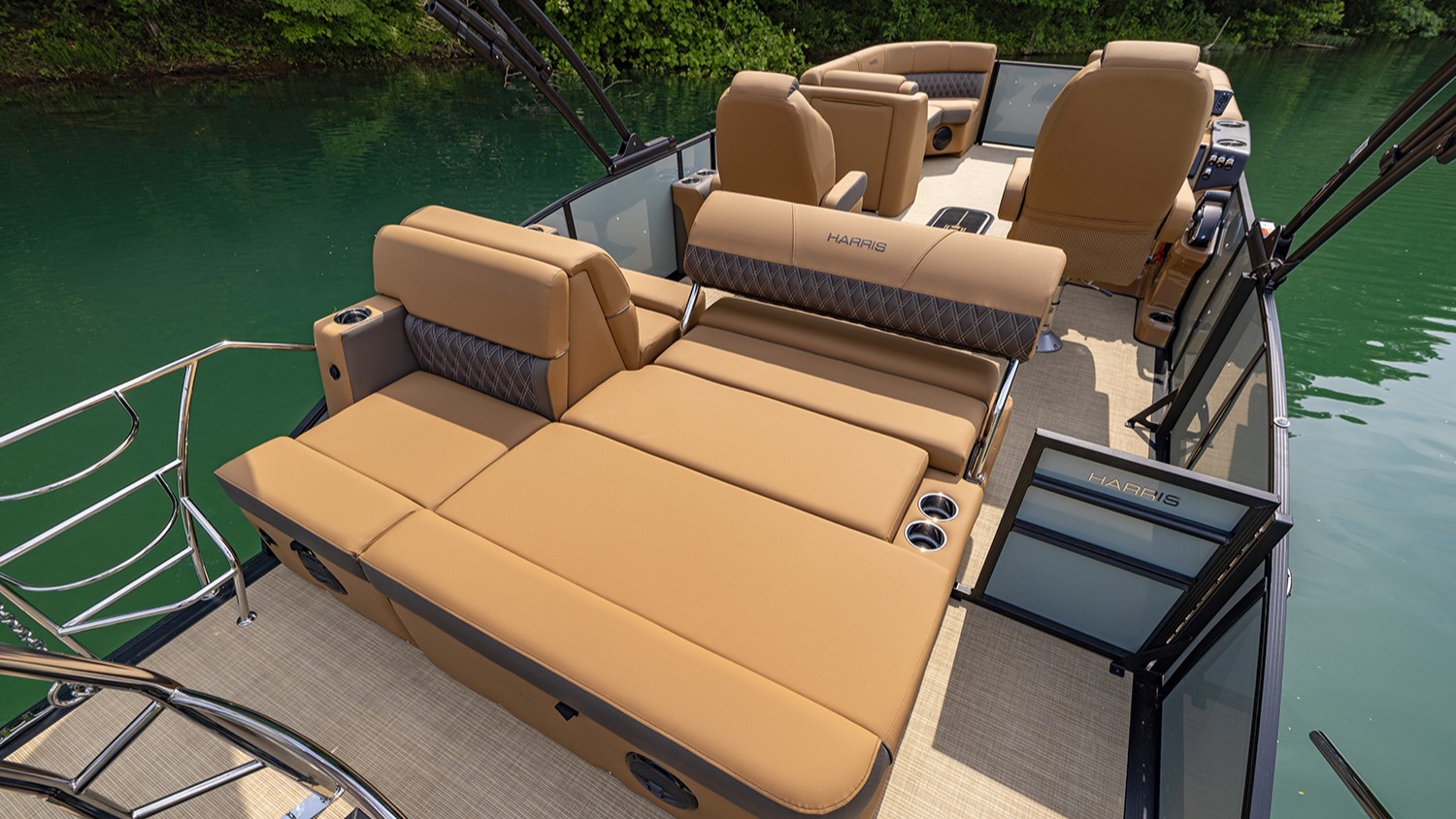
“There has been an especially high demand for Harris premium offerings,” added Brian Athmer, president of Harris Boats. “Consumers have responded positively to the significant effort and investment we have made on our interiors. Boaters value using the highest quality materials, innovative designs and packing the boats with features, storage and flexibility.”
He said customers prioritize any feature that simplifies or enhances the boating experience. “The 2026 Sunliner is a strong example of meaningful innovation in action. It’s cooler drawer, dedicated shoe storage and multifunctional furniture directly address real challenges consumers want to eliminate.”
Innovation drives interest
Manufacturers are responding to the demand for functional and aesthetic innovation, rethinking layouts, seating and helm technology to offer significant changes and upgrades.
“I think you’re starting to see pontoon sales increase, but not just for no rhyme or reason,” Hall said. “It’s because the product is getting much better. Product got stale – the stuff from 2019 to 2023 all looked the same. So it took a couple of brands to really go back to the drawing board and say, ‘Hey, let’s really change it and come out with a new series.’”
He noted Bennington’s entry-level M Series and flagship QX Series. “Bennington came in and redid everything from the flooring up,” Hall said about the M Series. “New flooring, new rails, new colors, new seats, new cushions and design, and a brand-new helm that is all touchscreen.”
He expects Bennington’s QX Series to perform well in 2026 too. Like the M Series, it features new rails, updated interior colors, a windshield and an all-new helm and co-captain touchscreen helm.
“We’ve seen manufacturers be open to innovation, from efficiencies in manufacturing to integrating new features and designs,” Schraedly added. “Not everything works, but some innovations have really moved the industry forward.”
Bennington’s approach, for example, has included standardizing builds to allow dealers to compete on price without devaluing the brand.
“Bennington has come out with a new entry-level model (the M Series) that really isn’t entry level,” Hall explained. “They started to build them in bulk. Rather than dealers ordering the same model but with different options, they built many of the same options, so they’re all the same price and dealers can win back some market share. That was the Bennington strategy.”
Harris has focused heavily on performance and engineering. Athmer noted the company’s RPM Performance Packages, standard on all Harris boats, to improve handling through advanced engineering techniques like Computer Aided Engineering and Computational Fluid Dynamics.
Engine performance and technology are also impacting the segment. Both Athmer and Hall noted the added power and performance of Mercury Marine’s newest V10 Verado outboards.
Pontoon resilience
Despite a softer overall market in recent years, pontoons remain notably resilient, alongside fishing boats, likely because of the segment’s price-per-square-foot, comfort and capabilities.
“Our pontoon segment performance in 2025 was down about 4% compared to 2024,” Schraedly said. “However, our overall major unit sales were up about 1%. We saw increases in our deck boat, aluminum fishing boat and outboard motor segments that offset our reduction in the pontoon segment. Pontoons, however, are still our bread and butter and accounted for 60% of all sales revenue in 2025.”
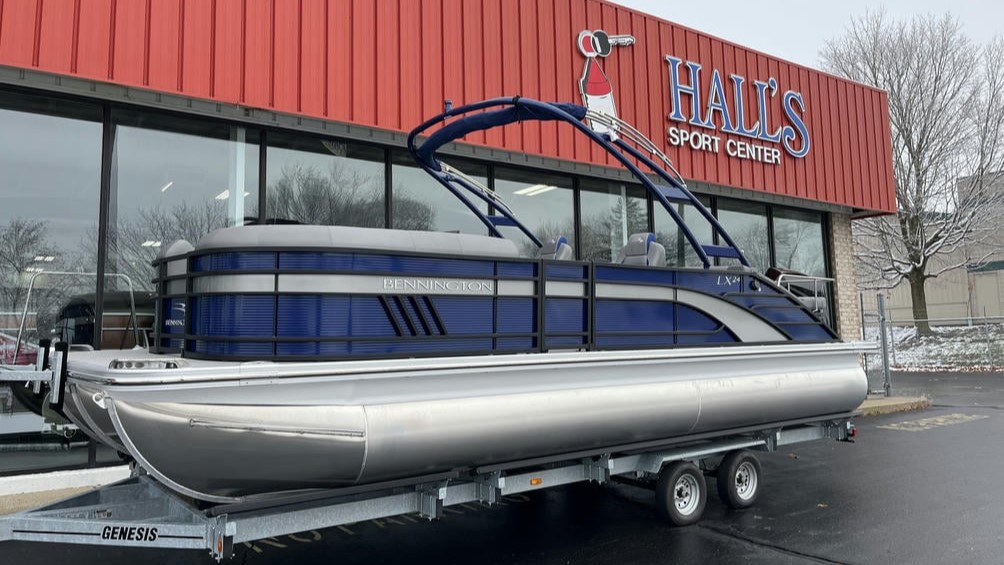
Following a challenging year in 2023, Hall said pontoon boats helped the dealership correct in 2024. “2025 was about dynamic ordering,” he said. “We restocked what sold in 2024, not what we hoped would sell. In 2025, fiberglass sales were the only sales I wasn’t happy with. I was very happy with pontoon sales last year. I finished the year with 42 new 2026 sales.”
“While a number of boat segments experienced some retail declines in 2025, we saw strong pontoon sales with Harris outperforming in this environment,” Athmer echoed.
Along with increasing product value, the perception of pontoons has changed over the years – what was once a grandparent’s boat is now appealing to younger boaters.
“Before, pontoon boats weren’t cool because they couldn’t go as fast; well now they can go as fast,” Hall said. And boaters can cruise in comfort. “It’s like a living room on the water.”
Optimism for 2026
“Pricing for new boats has become more challenging as the material costs have risen for manufacturers,” Schraedly said. “Aluminum tariffs have been a specific issue, and we are seeing that get passed along to dealers. We try to insulate our customers against those price increases as much as possible but there is only so much we can do.”
Despite this challenge, he noted that floorplan costs have eased slightly over the past year as interest rates began to come down, and dealers are in a more comfortable inventory position heading into 2026. Pontoon manufacturers, particularly larger brands, have been responsive to market conditions, adjusting production to match demand rather than flooding the market with new boat models.
“I think good things are coming in 2026,” Schraedly said. “2025 was the year everyone got their inventory corrected and manufacturers really stepped up their product game.”
Hall said the pontoon segment is better positioned than in the years just before Covid-19, regaining momentum after the pandemic peak, followed by a slowdown.
“We feel that our product mix in pontoons is as diverse as it’s ever been and focused on affordability,” Schraedly said. “We have a lot of exciting new features and packages that we believe will resonate with our customers. We’re as excited as ever for the 2026 season.”
“I always say we have a great brand and better dealership,” Hall said. “The service, warranty, storage – what the customer can expect after the sale – is part of the equation. A brand will sell, but you see the best numbers when a good brand is in a really good dealership.”
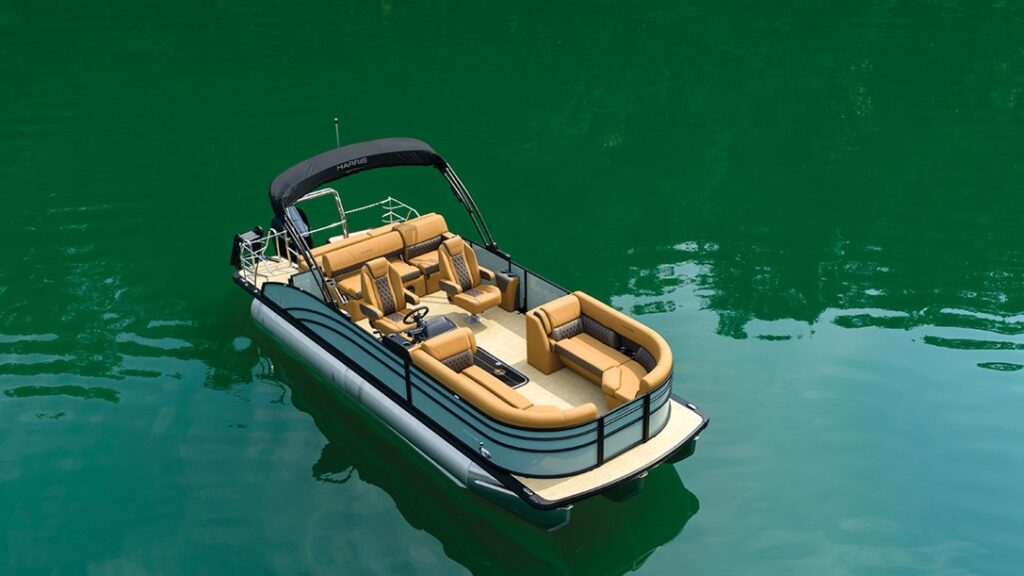
“There is high level of excitement and optimism within our dealer network,” Athmer added. “Harris has been investing continuously and extensively in R&D, and that has resulted in our current product portfolio that offers a compelling boat for almost every buyer that enters a Harris dealership. In addition to that, there is energy around the upcoming boat show and boating seasons. Late 2025 was really great for Harris and our dealers, and we anticipate that positive momentum to continue.”
As interest rates ease, inventory continues to right-size and products become more innovative, the pontoon segment enters 2026 on more stable waters.