Market Trends: Fishing boats reeling in tech and versatility
The fishing boat segment is growing in some categories, adjusting in others, and advancing technologically across the board. Maybe it’s cliché, but this sounds like a day of fishing. Sometimes the fish hit, some spots are duds, and technology is increasingly helpful to catch fish – even for the experts at the sport.
Boston Whaler and Lund Boats reveal a shared industry focus on innovation, versatility and addressing the needs of both seasoned anglers and newcomers, and the Recreational Boating and Fishing Foundation (RBFF) shared how dealers can retain these customers.
Growth segments and shifting sizes
While the overall marine market has stabilized post-pandemic, specific fishing boat categories are seeing growth.
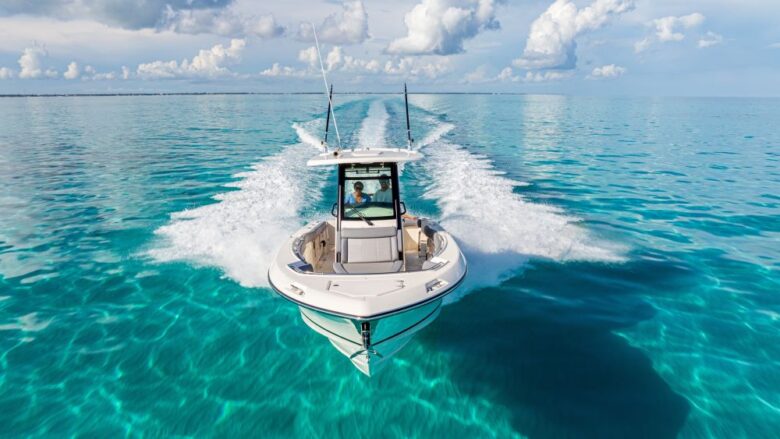
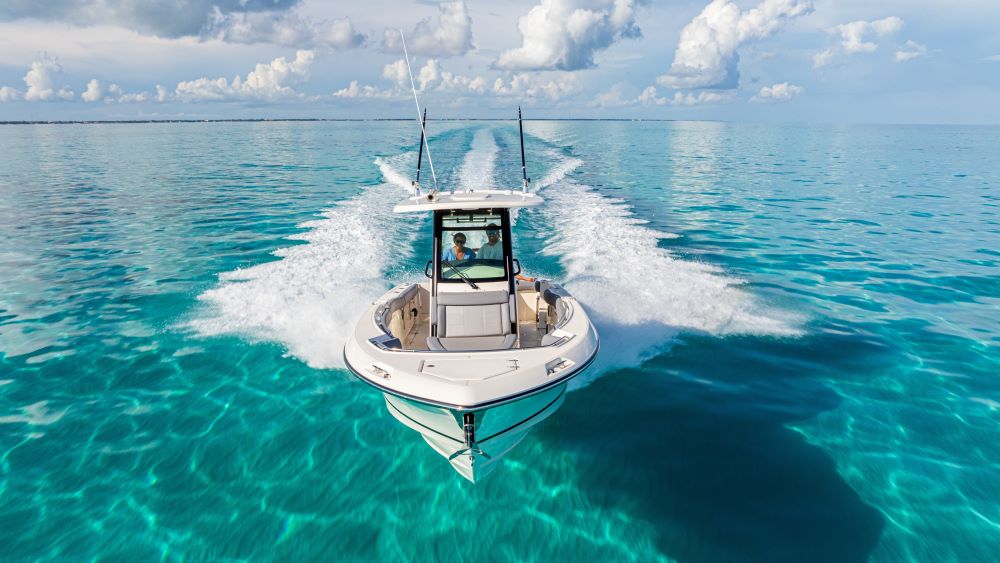
“Although the market has contracted over the past 8 to 10 years, some segments in saltwater fishing have grown, such as center consoles above 25 feet,” said Lenn Scholz, president of Boston Whaler. “The segments that have seen growth in the 40 foot and up [saltwater] category, these markets are growing as much as 5 to 10 percent.”
This shift is driven in part by the availability of higher horsepower, enabling larger boats to meet consumers’ performance demands.
Meanwhile, the aluminum fishing boat segment is also seeing an uptick in sales, especially Deep V aluminum boats. According to Jeromie Johnston, president of Lund Boats, aluminum fishing boat sales are up year-over-year. And Jon boats are selling well, he added.
“You look at fiberglass fishing boats for freshwater, that’s actually down,” Johnston said. “That counteracts a little bit. But I think what we are seeing is some of those folks that got into fishing during Covid, maybe they’re new to boating, a lot of those folks are staying and refreshing their boat buying over the last couple of years.”
The consumer
Dave Chanda, president and CEO of RBFF, stressed that marketing campaigns should represent the diverse fishing community, highlighting the participation of women and individuals from a variety of ethnic backgrounds.
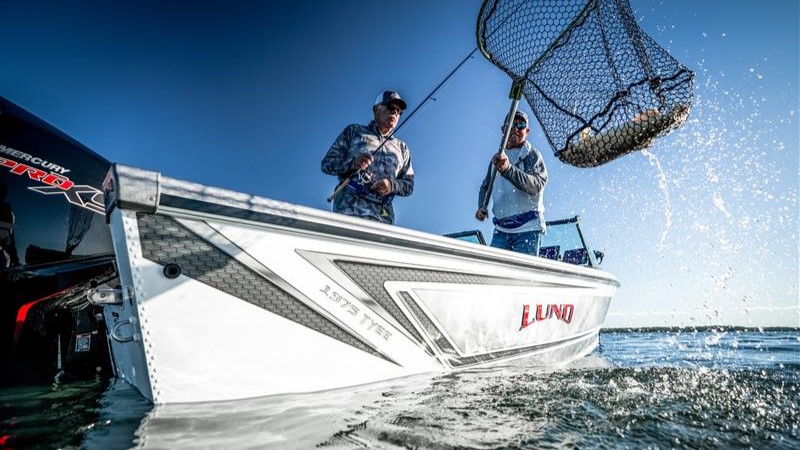
Women now represent about 36 percent of anglers, a little over 21 million participants, the highest percentage to date. “We know through research that women are the decision makers in the family,” Chanda said. So female participant growth also contributes to the growth of male and youth anglers.
Chanda noted that anglers who get involved in fishing before they are 16 years old are more likely to return to the sport. “If you don’t capture a young angler by the time they are 16 or 17, the likelihood that they’ll ever take up fishing drops by 85 percent,” he said.
Digital management services provider Lightspeed shared new and used fishing boat sales data based on sales between March 2024 and February 2025.
Generation X consumers purchased 38 percent of total unit sales. Baby Boomers followed closely at 35 percent and spent the most on average, with a unit price of $110,581. Millennials contributed 23 percent of purchases, favoring more affordable options at an average price of $71,443. Generation Z made up just 5 percent of sales, though their presence slightly increased in early 2025.
“We definitely cater towards middle aged and older [demographics],” Johnston said.“Those who have angled all their lives, generation after generation.” These are Generation X and Baby Boomer buyers, roughly 73 percent of the market identified by Lightspeed.
But he noted Lund’s entry level boats, in the 16-foot range, appeal to new boaters and families who want a reasonably priced way to get on the water. While shoppers have shown consistent demand for these price-point boats, they also desire onboard electronics and are willing to pay.
“The introduction of key technologies has opened up boating for a totally different audience,” said Scholz. “We have customers buying a 42-foot Outrage and it’s the first boat they’ve ever owned.”
Increasing technology
Both Boston Whaler and Lund emphasized the role technology plays in expanding their customer base. Scholz noted that intuitive systems like joystick piloting and digital dashboards are bringing in first-time boaters.
“The displays are getting bigger and bigger,” he said. “The amount of data you can have on the dash continues to increase. With those more advanced screens, it brings a whole other level of boat control. Through a digital network, you can have control of your entire vessel now straight from the dash.”
He emphasized that connectivity is important across all boat sizes. For smaller models, digital engines enable users to access performance data on their phones. On larger boats, integrated systems allow owners to remotely monitor and control features like air conditioning and freezer plates, readying their boat before they step on the dock.
“Connectivity has a huge part to play in our service experience that we have yet to fully tap into,” Scholz added, pointing to the potential for usage-based service prompts and remote diagnostics.
For Lund, advancements in fishing-specific features, like sonar integration and intuitive controls, enhance the fishing and boating experience. This technology enables confidence on the water and helps retain customers by making boating less intimidating.
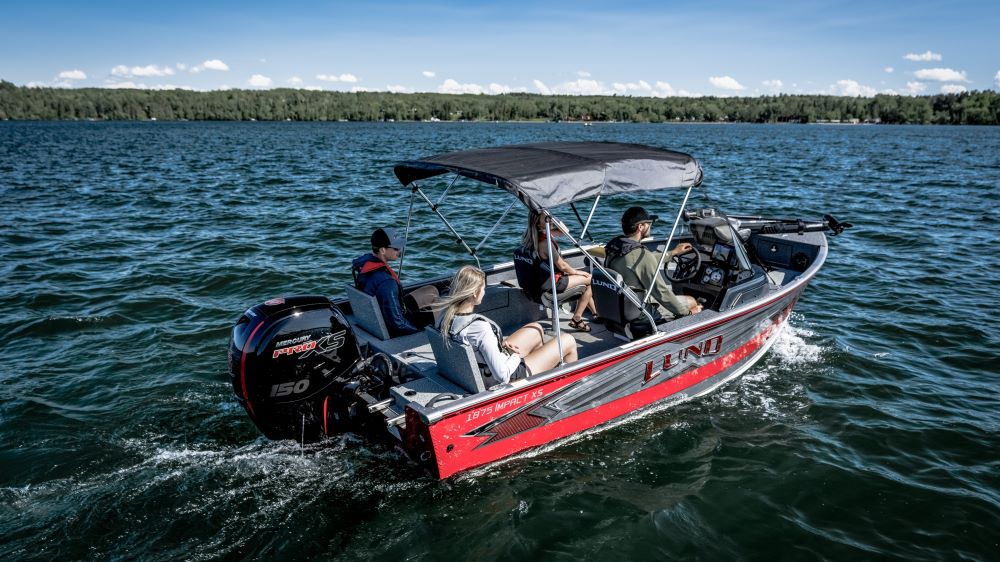
“With forward-facing sonar and the larger multifunction displays, manufacturers are trying to clear up the console space,” Johnston said. “You really compress what’s on the dash itself, switch panels and gauges, into small clusters so you can have a flat console top for two multifunction displays side by side. You’ve also seen the bow of the boat become much more important. Customers are putting locaters and displays on the bow.”
Lund carries these flat top consoles down to entry level models. And through design, the company enables the technology that consumers want to be installed and integrated into its boats. “Whether it’s wireless phone chargers, which everyone comes to expect, Bluetooth connectivity, utilizing mapping software and creating custom maps and integrating that with phone and app-based software,” he explained. “As a manufacturer, we’ve got to make sure there’s space onboard and electrical systems available to make that installation efficient and effective.”
Multipurpose is the new norm
One of the biggest shared trends is the growing demand for versatile, multi-use boats. Both brands are leaning into hybrid designs that balance serious fishing capabilities with features for cruising, entertaining or family outings.
Scholz noted how Boston Whaler evolved from strictly fishing platforms to hybrid boats. This shift began after the Great Recession, and dual consoles like Whaler’s Vantage line, which support a wide range of day boating activities, were well received by consumers.

“We started adding more of those comfort amenities – bow seats, aft seats,” he said. “It became a balance between having a boat that you could still seriously fish, but it also had the comfort and amenities to do other things besides just fishing.” Lund sees a similar trend and its boats are increasingly designed to accommodate multiple family members and multiple use cases, from trolling on the lake to pulling family members on a tube.
“We have a 17, 18 and 20-foot Impact, and it’s a great example of a boat where you can fish in the morning, and then recreate with the family in the afternoon,” Johnston said. The model offers aft and bow cushions and aft jump seats. “You can fish on the aft deck and then flip the seats up and you’ve got additional seating,” he explained. “You can go skiing as well. We put a lot of thought into that.” Lund also offers a Crossover model designed for fishing and recreational use.
RBFF’s research shows that if anglers can fish while enjoying other hobbies like camping, reading or cooking, they are more likely to continue participating in the sport. “We see a lot of opportunities to align fishing with other things that are important to you,” Chanda said.
In the boat market, this research supports the multipurpose vessel, which allows fishers to enjoy several interests at the same time.
Electrification and sustainability
Sustainability is another area where both manufacturers are innovating, though in different ways. Boston Whaler is focusing on electrification at the systems level, launching its lithium-ion generator replacement that charges from the engine’s alternator and eliminates the need for a traditional gas or diesel generator.
Boston Whaler also employs closed molding and robotic gel coating in production, reducing emissions and improving material efficiency. Engine and hull design improvements also contribute to better fuel economy, a concern for both environmental and financial reasons.
“Mercury has the Avator series of outboards that certainly serve those who want to have a lower carbon footprint, or maybe they’re on a horsepower restricted lake,” Johnston said.
And electric trolling motors (24V and 36V systems) are widely used by anglers and installed on nearly all Lund boats, either at the factory or dealership.
Lund designs lightweight, efficient aluminum riveted hulls, which require less horsepower to perform. This reduces fuel consumption and environmental impact. Lund is also close to being fully wood-free, part of a broader goal to reduce waste, improve boat longevity and boost fuel efficiency.
To cut waste and energy usage in its New York Mills facility, Lund uses automated, energy-efficient machinery and recently installed solar panels in partnership with a local power company.
Looking ahead
Johnston sees the future of boating being shaped by younger families looking to create memories on the water. To support this, manufacturers will focus on making boating more accessible and family-friendly. Automotive-style features and automation, like tech-assisted launching and docking, will become more common.
He expects innovations in boat layouts and features, like improved boarding ladders, versatile seating and designs that support both fishing and recreation.
“I think you’re going to see new materials go into boats as well,” he said. “A lot of carpet and vinyl and things that have been used in the past, you’re going to see some new coatings, new materials being used… Aesthetics plays a big part, but when you’re in the fishing industry, it’s got to last a long time, so longevity of those materials is critical.”
Boat club memberships and rental options like Freedom Boat Club are also becoming more popular and making it easier for more people to access the water.
The fishing boat segment is evolving in two directions – upmarket with bigger, more tech-heavy boats and inland with aluminum models. Across both, technology, versatility and sustainability are shaping the future. Manufacturers are responding with smarter systems, hybrid layouts and eff orts to keep boating accessible and sustainable.
Building Community
While boat manufacturers work to improve the boating experience, RBFF is focused on building local community connections to keep people engaged in fishing and boating.
Research shows that most anglers fish close to home and value shared experiences, so RBFF is exploring how to help local retailers and agencies better support those communities through information, training and relationship-building.
RBFF is working with the Marine Retailers Association of the Americas and other stakeholders to pilot programs that connect state agencies, retailers, and industry partners. Initial projects are underway in West Virginia and Kentucky, using insights from RBFF’s data to improve messaging, education and customer service.
“We can connect those local communities, especially a boating community that’s right there on the water,” Chanda said. “It would be easy to connect them with a state agency to do a fishing clinic or a boating clinic or ‘How to trailer your boat’ in the community to keep it local. It’s just good customer service to bring those people back.”
Ultimately, RBFF aims to create replicable models that tackle shops and boat dealers can use to strengthen community ties and grow long-term participation. The goal is to support all age groups and demographics.
“Many times, a boat dealer sells a boat and then off you go, but they don’t think about the fact that if you’re a new boat owner, you need a lot of hand holding if you’re really going to stay in the sport,” Chanda said. “Maybe the boat dealership needs to do a better job of teaching you how to trailer your boat, launch your boat and bring that boat owner back and ask them how they’re doing… It’s just good customer relations.”