Key Consumer Trends Shaping the PWC Market
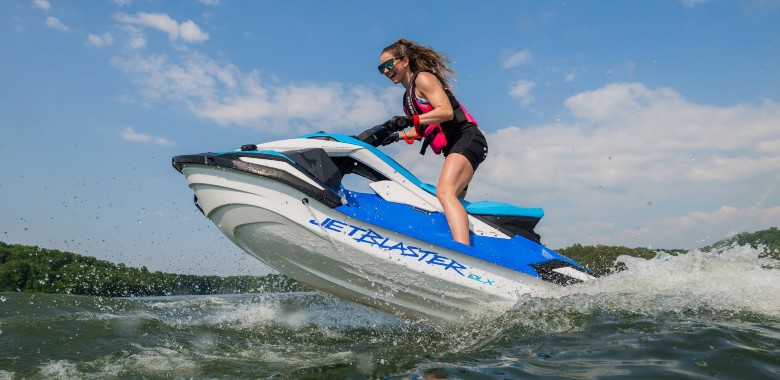
Once defined strictly by high-speed thrill-seekers and seasonal beach rentals, the Personal Watercraft (PWC) market is undergoing a major structural evolution. The sector is being reshaped by shifting consumer demographics, rapid technological integration and changing environmental priorities.
Today’s buyers are no longer just looking for raw horsepower on the water; they are demanding versatility, connectivity, eco-conscious engineering and lifestyle-oriented designs.
Valued at $1.25 billion in 2025, Fortune Business Insights projects PWCs to grow from $1.35 billion in 2026 to $2.59 billion by 2034. North America dominated the personal watercraft market with a market share of 42% in 2025.
The market is dominated by major recreational vehicle manufacturers with established global distribution networks. BRP (Sea-Doo) leads the industry with 48% market share, according to Intel Market Research, followed closely by Yamaha Motor (WaveRunner) at 34%.
These two players control over 80% of the global PWC market through continuous innovation in engine technology (notably the 1000cc-1500cc segment) and strong brand loyalty among water sports enthusiasts. Intel Market Research found that Kawasaki (Jet Ski) maintains a significant position (12% share) as the original PWC brand, particularly in performance models exceeding 1500cc displacement.
So, what’s driving this demand?
Consumers Want Reliable PWCs
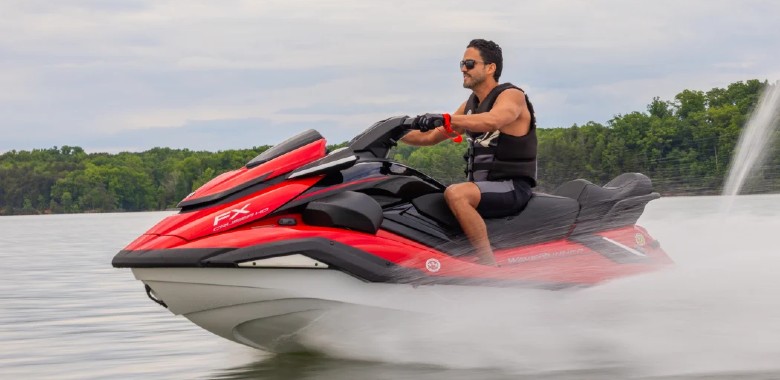
For today’s buyer, reliability is still the number one thing that drives a purchase decision, and the new 1.9L HO engine is how Yamaha delivers on that.
“The big differentiator with the 1.9L HO is that you get high performance without giving up naturally aspirated reliability,” Martino Ruggeiro, Yamaha WaveRunner Product Planning Manager, says. “No supercharger means less to go wrong, less maintenance, the freedom to run regular unleaded and an engine that holds up over the long haul.”
Ruggeiro explains that the 1.9L HO represents a shift in how Yamaha thinks about engineering: more usable torque, better drivability, better efficiency and stronger reliability instead of just piling on peak horsepower.
“That’s exactly what recreational PWC owners are asking for ─ a powertrain that’s responsive, cheap to own and dependable for years,” he says.
Electrification and Eco-Innovation
The electric PWC market is emerging as one of the fastest growing segments within the marine leisure industry, according to Fortune Business Insights, driven by rising environmental concerns, stricter emission regulations and consumer demand for sustainable recreation.
Unlike traditional gasoline-powered models, e-PWCs offer quieter, zero-emission rides, Fortune Business Insights reports, making them increasingly attractive for rental fleets, eco-tourism and recreational users in lakes, coastal resorts and urban waterfronts.
Advances in lithium-ion battery technology and fast-charging solutions are extending ride times and reducing range anxiety, while major brands such as Sea-Doo and Yamaha, along with innovators such as Taiga Motors, are investing heavily in electric models.
“Lithium batteries provide a stable voltage curve and allow deeper discharge compared to lead-acid batteries, meaning a significantly higher proportion of stored energy is actually usable,” says LiTime’s Marine Application Product Manager, Ikun Liang. “This is critical for both propulsion systems and onboard electronics.”
Lithium batteries can deliver equivalent or greater usable energy at significantly lower weight and volume, directly improving watercraft efficiency, range and handling.
Rental Operator Segment Dominates PWC Use
According to Fortune Business Insights’ research, the rental operator segment is expected to lead by end use, holding 47% of the global market share in 2026. This is due in part to the rising demand for water sports and recreational activities across coastal regions, lakes and tourist destinations.
Many consumers, especially tourists and occasional riders, prefer renting PWCs rather than purchasing, according to Fortune Business Insights, as it provides a cost-effective way to experience the thrill of water-based activities without long-term ownership expenses. Rental operators typically offer fleets of various PWC models, catering to different customer preferences, from recreational rides to high-performance experiences.
Ruggeiro says Yamaha works very closely with its rental operators, as they represent a decent slice of sales for the manufacturer.
“We’ve been the number one choice of rental fleets for years, and that reputation does real work for us,” he says. “When a boat proves itself in the punishing conditions of a rental operation, retail buyers notice. A lot of people ride one of our units for the first time on vacation, and that good experience is what pulls them toward our brand when they’re ready to buy.”
Yamaha spends a lot of time with its rental operators to help figure out exactly what they need and build it into the product, according to Ruggeiro.
“For them, it usually comes down to two things: reliability and easy access to parts and support,” he says.
Midrange PWCs are Thriving
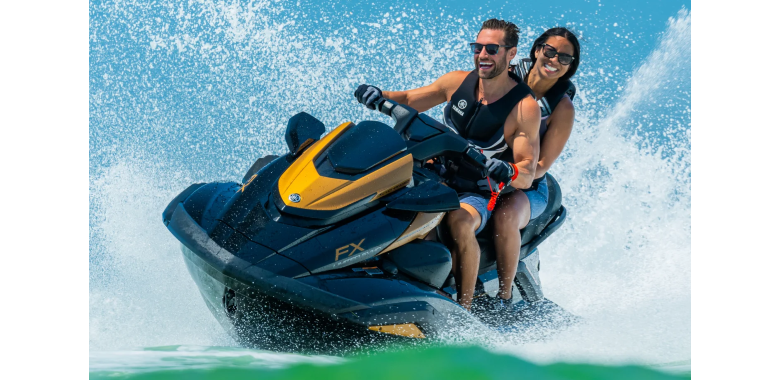
When it comes to engines, everyone wants to talk about high horsepower. But Ruggeiro describes that when you look at the industry numbers, the midrange segment is bigger, and it’s growing faster.
“That’s not to say high performance doesn’t matter, because it does, and those buyers are the die-hard enthusiasts who live for the sport,” he says. “But there’s a real trend of consumers deciding ‘this is plenty,’ then either stepping up to a higher engine option on an entry-level model or dropping down to a smaller engine on a luxury or performance model to save money while still getting more power than they expected.”
Outside of the very price-conscious shopper and the hardcore enthusiast, just about everybody is a candidate for that midrange segment.
“That’s exactly where the 1.9L HO shines,” Ruggeiro says. “It also points to where our engine development is headed. Buyers care more about quick acceleration, towing and easy cruising than they do about chasing a top-speed number. And with fuel prices and emissions rules where they are, we’ll keep leaning on things like combustion tuning, friction reduction and smarter engine management.”
Fueling Industry Growth
As manufacturers attempt to balance reliability, electrification and raw performance, understanding these shifting consumer priorities is critical for dealerships, marine operators and industry investors looking to capture the next wave of growth.
Yamaha is ready to take on the future of the PWC market, with its research and business development teams keeping close watch on these industry trends.
“But the biggest factor is the customer, plain and simple,” Ruggeiro says. “How they spend drives the industry numbers, and what they want dictates what the product becomes. Covid made that obvious: people suddenly wanted to be on the lake instead of stuck at home, and that shift changed how manufacturers plan production and work with suppliers almost overnight. There are models on the market right now that only exist because people started using PWCs differently, for fishing, for customizing or for whatever fits their lifestyle.”
This article was originally published in the August 2026 edition of Boating Industry.